Intelligence Hub
The intelligence layer behind every conversation.
Voice of Customer
Understand what customers are really saying by automatically highlighting themes, questions and recurring issues across every conversation, giving you a real-time view of evolving needs.
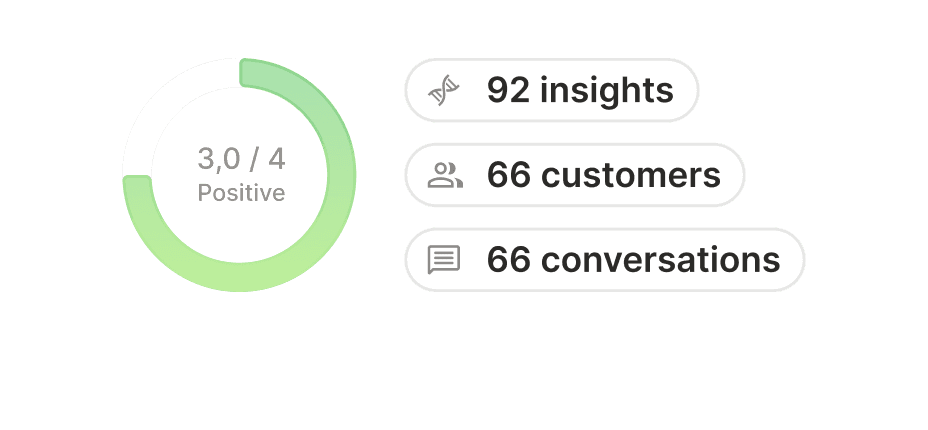
Intent and semantic analysis
Uncover the meaning behind each interaction through contextual and semantic analysis, revealing patterns and opportunities that go far beyond simple keyword tracking.
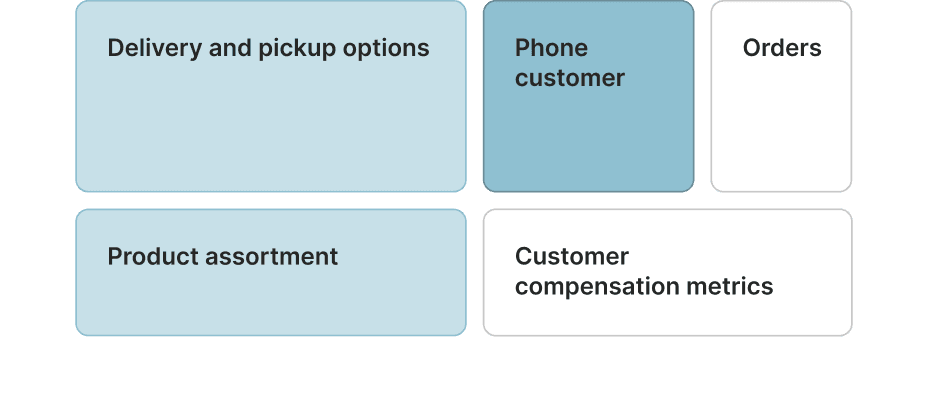
Sentiment and emotional signals
Detect emotional shifts and tone across conversations to identify frustration, urgency or satisfaction early, helping teams act before issues escalate.
Segmentation and behavioral insights
Create dynamic segments based on enriched conversation data and behavioral signals, helping teams identify patterns, prioritize opportunities and act with precision.
Performance and optimization
Continuously improve agent performance by tracking resolution quality, workflow effectiveness and emerging signals across conversations.
What is Intelligence Hub?
Intelligence Hub is the analysis layer that transforms conversations into structured insight. Every customer interaction is processed to extract themes, intent, sentiment and behavioral signals. The system groups similar conversations into clusters, detects significant changes in metrics like conversation volume, and surfaces recurring questions or friction points. Teams access these insights through dashboard views that segment by time range, channel, customer attributes or campaign. Intelligence Hub helps operators understand what customers need in aggregate by surfacing patterns across conversations, and helps improve agent performance by identifying which topics or workflows need better handling. All analysis happens automatically as conversations occur, with no manual tagging or categorization required.
How it works
As conversations complete, the system analyzes message content to extract structured data. Sentiment analysis evaluates emotional tone across the conversation arc. Clustering algorithms group conversations by semantic similarity, surfacing common themes without predefined categories. Intent classification identifies what customers are trying to accomplish. Metric tracking monitors conversation volume, response time and goal achievement. The system detects significant changes like sudden spikes in specific conversation types, flagging them as signals that require attention. All insights feed into dashboard views where operators can filter, segment and drill into specific patterns. You can export conversation data and analysis results into your own reporting tools.
Frequently asked questions
What types of insights does Intelligence Hub extract?
Intelligence Hub extracts conversation themes through clustering, customer intent through classification, emotional sentiment through tone analysis, and behavioral patterns through metric tracking. It detects significant changes in conversation volume or other metrics and flags them as signals. Recurring questions are surfaced by frequency analysis. All insights can be segmented by channel, time range, campaign or customer attributes to identify patterns within specific contexts.
How does clustering work?
Clustering groups conversations by content similarity and meaning rather than exact keywords. The system processes conversation content and applies clustering algorithms to identify natural groupings. Clusters surface common themes like product questions, order issues, or feature requests without requiring manual category definition. You can view cluster membership, explore representative conversations within each cluster, and track how cluster composition changes over time.
What are signals and how are they detected?
Signals are significant changes detected in conversation metrics or cluster patterns. The system monitors baseline values for metrics like conversation volume and average response time, then flags important deviations. Signals can indicate spikes in specific conversation types or emerging customer needs. Each signal includes severity, impact assessment, and a summary description. Operators review signals through the dashboard to decide whether action is needed.
How is sentiment analysis performed?
Sentiment analysis evaluates emotional tone at the conversation level by analyzing message content throughout the interaction. The system classifies overall sentiment as positive, negative or neutral, and tracks how sentiment evolves across the conversation arc. This helps identify frustration that escalates during unresolved issues or satisfaction that increases after successful resolution. Sentiment scores are aggregated to show trends across campaigns, channels or time periods.
Can I export conversation data and insights?
Yes. The exporter module lets you extract conversation records, message content, capability executions, and derived insights like sentiment scores or cluster membership. Exports can be filtered by date range, campaign, channel or customer segment. Data is provided in structured formats that integrate with your analytics stack, letting you build custom reports or feed conversation intelligence into other business systems.
How does Intelligence Hub help improve agent performance?
Intelligence Hub identifies which conversation types or topics have high escalation frequency or negative sentiment. These patterns reveal where agents struggle and need better capabilities, additional knowledge base content, or refined behavioral rules. Performance metrics show goal achievement rates, capability execution success, and response quality across campaigns. Teams use these insights to iterate on agent configuration, prioritizing improvements that address the most frequent or impactful issues.